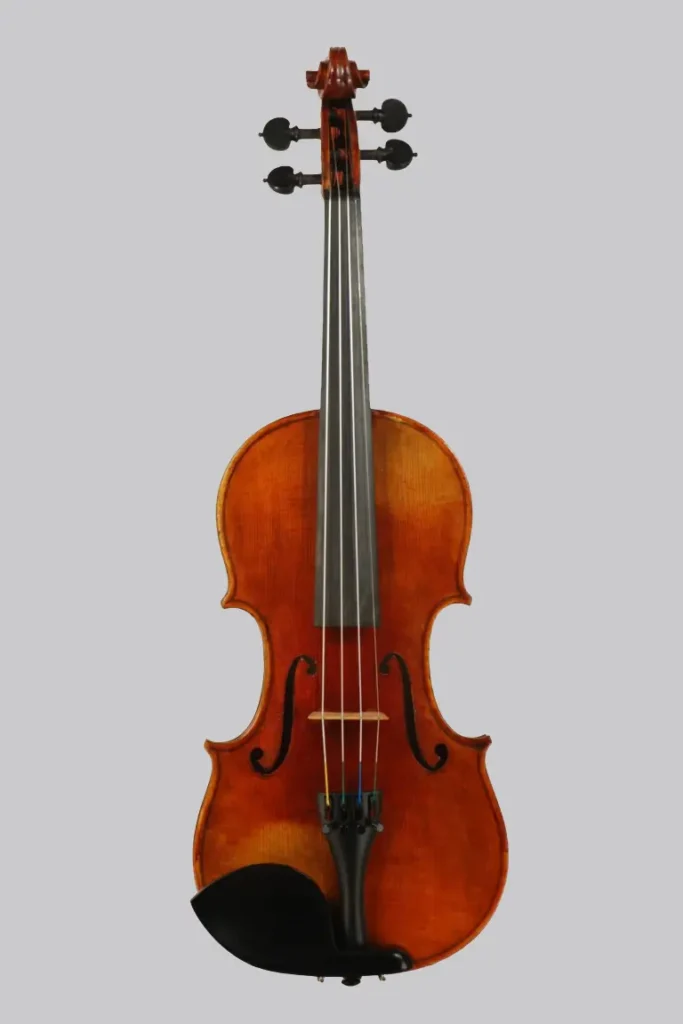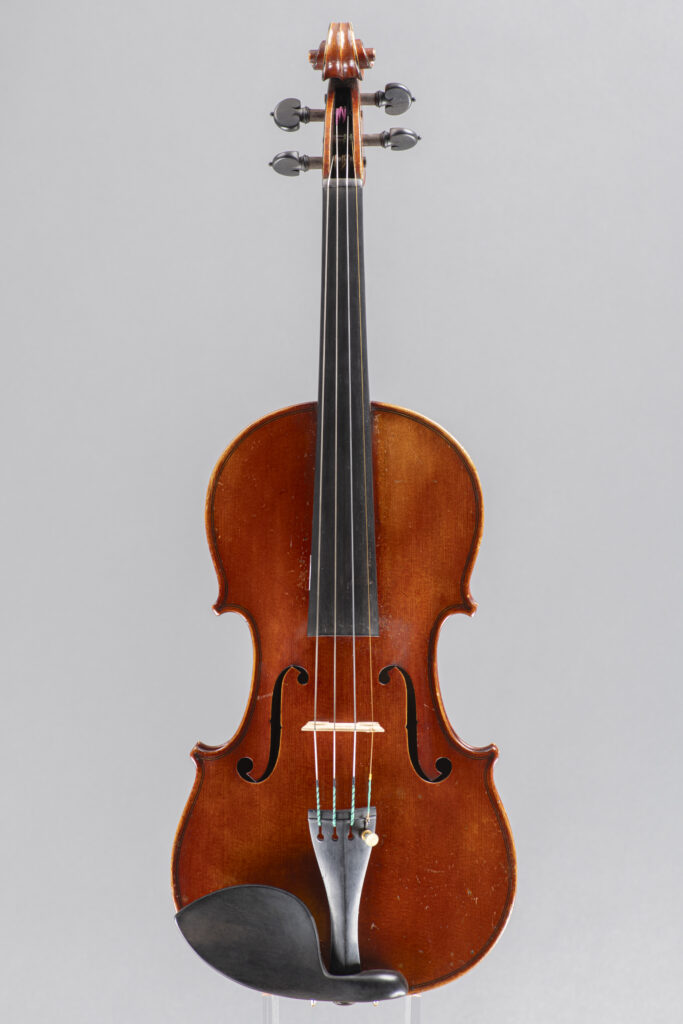


A violin produced around 1950–1960 that is possibly Italian by an unknown maker often stems from regional workshops in areas like Cremona or Lombardy, sometimes sharing stylistic elements with Central European, particularly German, workshop instruments of that era. These instruments are often identified by a spruce top, flamed maple back, and a varnish that may be lighter or more amateurishly applied compared to professional, earlier Italian masters.
Key Characteristics & Context
Origin: Many violins from this period, even those sold in Italy, were produced in specialized workshops that were sometimes influenced by, or in collaboration with, Central European luthier traditions.
Styling: They often mimic classic Cremonese models (Stradivari or Guarneri patterns) but were produced for a broader market.
Identification: Without a reliable, original label, identification relies on evaluating the varnish quality, wood selection (e.g., flamed maple), and scroll carving style.
Value: Generally, an unknown Italian maker from the 1950s-60s holds value based on its individual craftsmanship and sound quality rather than “master” status. This violin is priced based on workmanship, which is very nice quality.