

Picture two French violins sitting side by side on the workbench. At a glance they look like cousins: warm varnish, graceful curves, that unmistakable French elegance. But one came from a busy workshop town in the east of France, and the other from a refined atelier in Paris, and those two backgrounds shaped almost everything about how the instruments were built, how they sound, and what they are worth. This guide walks through how Mirecourt and Paris workshops actually differed, and what that means for you when you are choosing a French violin to play or to add to your collection. No secret formulas, no marketing gloss, just the practical distinctions that matter.
Two Centers, One French Tradition
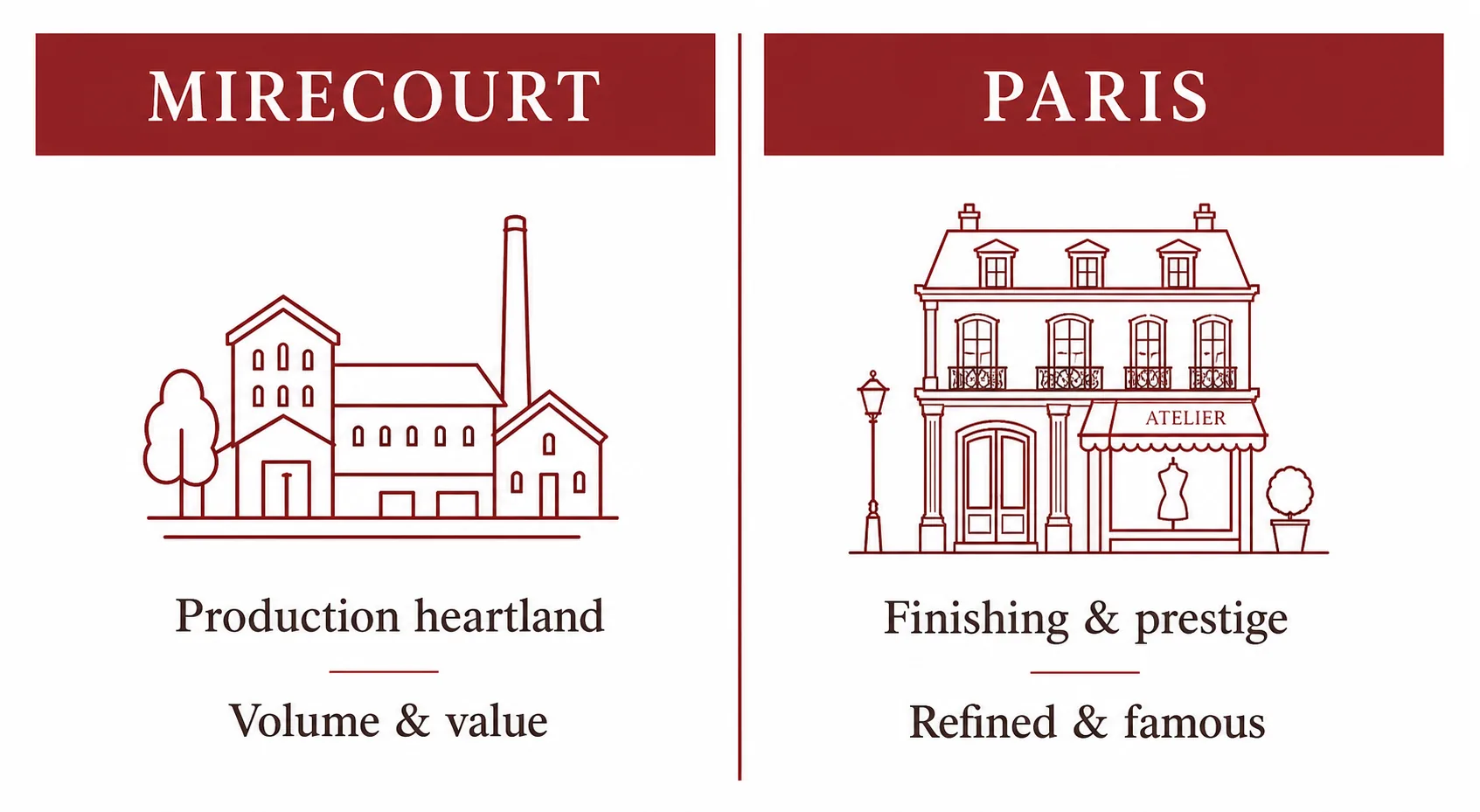
It helps to stop thinking of Mirecourt and Paris as rivals and start thinking of them as two ends of one supply chain. Mirecourt was the production heartland, the town where the vast majority of French violins were actually built. Paris was the finishing-and-prestige hub, where the most celebrated dealers, restorers, and master craftsmen set up shop, certified instruments, and sold them to soloists and wealthy amateurs.
French violin making rose to global standing across the 18th, 19th, and 20th centuries, and the depth of that French violin-making heritage from the workshops of Mirecourt and Paris is something museum collections still document today. If you want to see how seriously these instruments are taken as cultural objects, the musical instruments collection at The Metropolitan Museum of Art holds fine French examples alongside the Italian masters. Mirecourt and Paris were not competing schools so much as two links in a single, remarkably productive national tradition.
Mirecourt: The Workshop Town Where French Violins Were Born
Mirecourt is a small town west of the Vosges mountains, and for roughly two centuries it was the engine of French violin making. If you own a French violin, there is a very good chance its wood was first shaped here.
How the town organized violin making
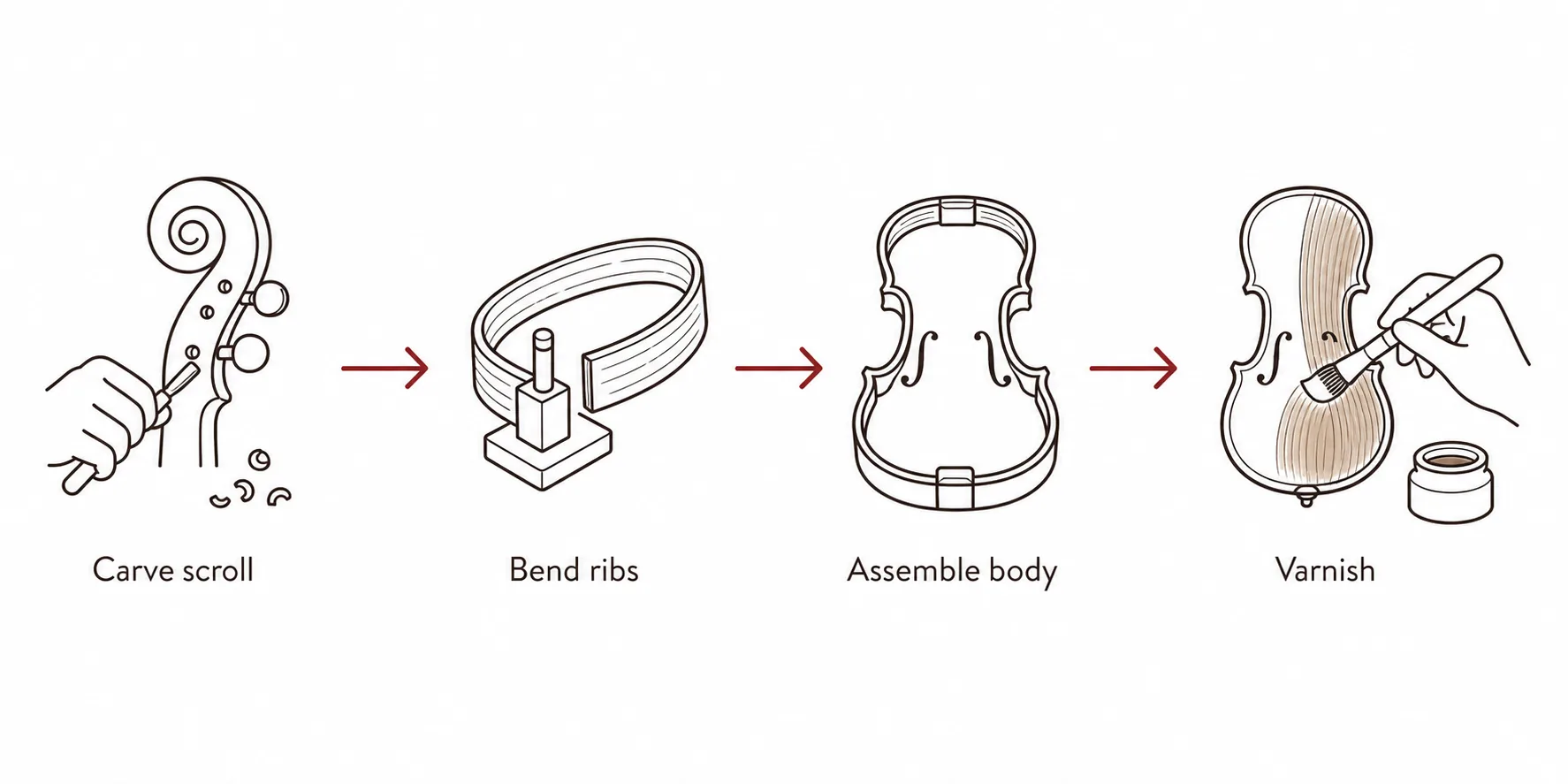
What made Mirecourt special was not one genius luthier but a way of working. The town developed a division-of-labor model long before that was common elsewhere. Instead of a single maker doing every step, different hands specialized: one worker roughed out scrolls, another bent ribs, another handled varnish. Family workshops passed these skills down through generations, and apprentices trained young.
That system did two things at once. It produced instruments in real volume, and it produced them with a consistency that is still noticeable today. When you pick up a good Mirecourt violin, the workmanship tends to be clean and predictable because the people making it did the same operations thousands of times.
What a Mirecourt violin tends to be
As a rule of thumb, a Mirecourt violin gives you reliable construction, tidy craftsmanship, and a strong, projecting tone, all at a price that represents genuine value for a working player. These were instruments built to be played, night after night, in orchestras and teaching studios, and many have held up beautifully for a hundred years or more.
One word of caution while we are here, because it trips up a lot of buyers. If you come across the name Klotz, or specifically a Josef Klotz violin, that is not a French instrument. If you are comparing a Mirecourt instrument with similar instruments from across the border, see our assessment of factory-made German violins for working players. The Klotz family came from Mittenwald in Germany, and their name appears on countless trade violins. It is easy to confuse German trade instruments with French ones when you are comparing older violins by feel and by label, so it is worth knowing the Klotz name points east of the Rhine, not to Mirecourt.
Mirecourt makers, then and now
Mirecourt never really stopped. The town produced a long line of respected makers, and the tradition has not died out. Makers still work there today, building new instruments by hand in the same lineage, and their output is one reason French violins remain a smart place to look when you want quality without an Italian price tag. Rather than throw around names I cannot verify for your specific instrument, I would rather show you how to read the workmanship in person, which we will get to below.
Paris: Where French Violins Were Refined and Made Famous
If Mirecourt built the instruments, Paris is where many of them were polished, sold, and made famous.
The Paris workshop model
Paris worked differently. Instead of a whole town organized around volume, the capital had fewer, more prestigious ateliers, each built around the reputation of an individual master. These were the workshops that attracted the finest talent, that handled the great Italian instruments passing through the market, and that developed the expertise in restoration, dealing, and certification that the trade depended on. When a Mirecourt-made violin needed final finishing or a prestigious signature, it often traveled to Paris.
What a Paris violin tends to be
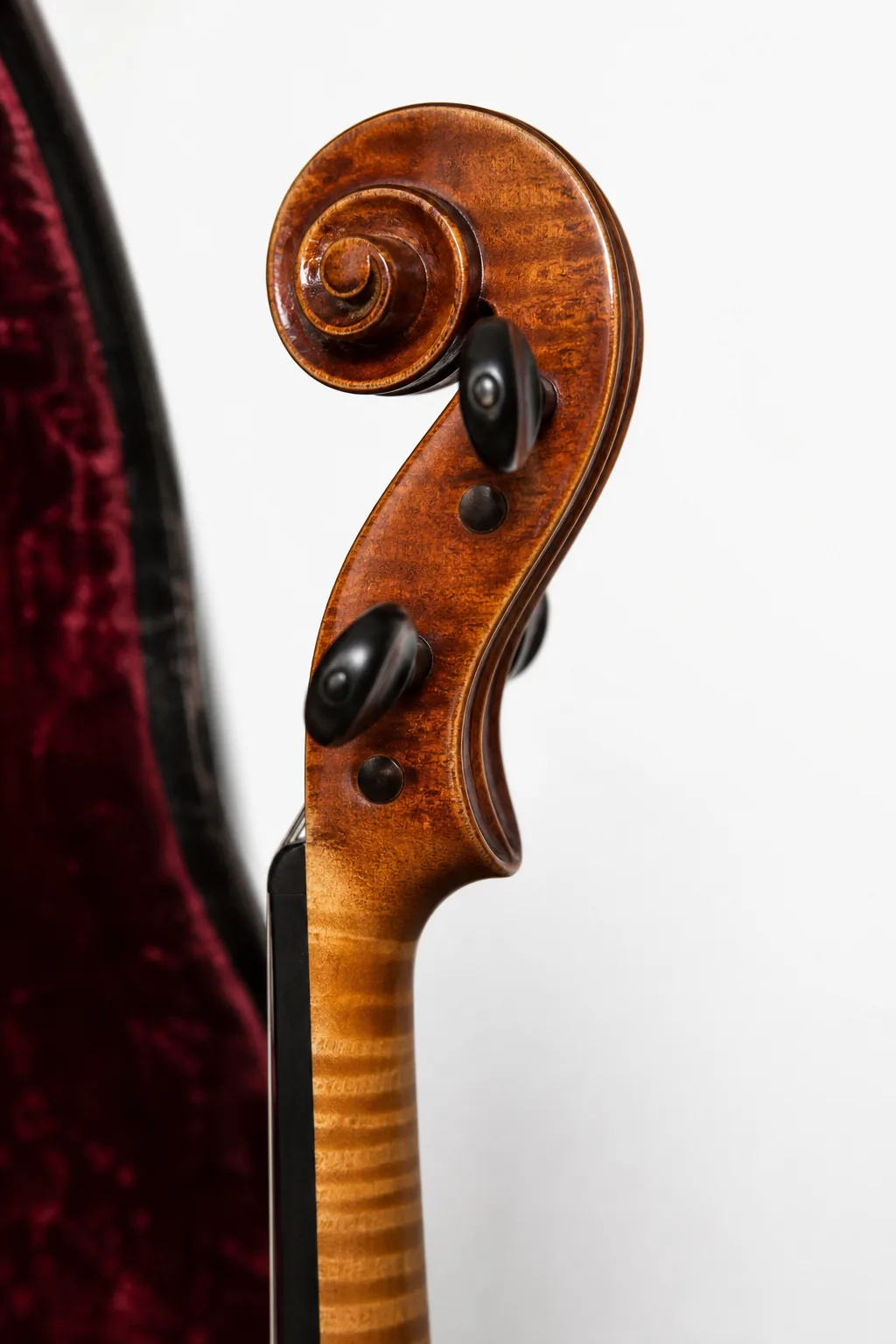
Because of that focus on refinement, a Paris violin often shows more attention to varnish, aesthetics, and elegant modeling. The voice tends toward the sweeter and more focused end of the French spectrum, and the prestige of a well-known Parisian name usually carries a higher price. The great 19th-century Parisian tradition, associated with celebrated makers whose instruments are held in institutions like the National Music Museum at the University of South Dakota, set a standard for finish and modeling that shaped how the whole world thought about French violins.
You can see this refinement in the fine French shop instruments that have survived, such as a violin from the esteemed Paris workshop of Chardon & Fils, whose makers moved in the same rarefied Parisian world as the finest Italian instruments of their day. If you want a fuller picture of what set the capital apart, our overview of Paris violins and their refined craftsmanship goes deeper into the aesthetics and tonal character that made these instruments so sought after.
Mirecourt vs Paris: The Differences That Actually Matter to a Player
Here is the comparison you came for, kept practical. Think of these as tendencies, not iron laws, because good and mediocre instruments came out of both places.
| What differs | Mirecourt | Paris |
|---|---|---|
| Construction and workmanship | Efficient, consistent production, so its instruments are dependable and cleanly made | Bespoke refinement, so its finest instruments show a little more individual care in the details |
| Varnish and appearance | Often applied efficiently and durably for instruments meant to be played hard | Ateliers tended to spend more time on color, depth, and finish for instruments meant to impress |
| Sound and playability | Often sound focused and strong in the bass, with plenty of projection | Lean sweeter and more refined under the ear |
| Value and price today | Tend to offer stronger value for the money | Names generally carry a prestige premium |
Construction and workmanship
Mirecourt leaned toward efficient, consistent production, so its instruments are dependable and cleanly made. Paris leaned toward bespoke refinement, so its finest instruments show a little more individual care in the details. Neither approach is “cheap” versus “quality”: a top Mirecourt violin can outbuild a middling Paris one. What differs is the working method behind them.
Varnish and appearance
Varnish is where the two traditions often show their hand, and it is also where a very old question comes up: what varnish did Stradivarius use? The honest answer is that no single secret formula has ever been proven. The great makers used oil and spirit varnishes built from materials available in their time, and generations of careful analysis have found craftsmanship and good materials, not magic. French makers worked in that same practical tradition. Mirecourt varnish was often applied efficiently and durably for instruments meant to be played hard, while Paris ateliers tended to spend more time on color, depth, and finish for instruments meant to impress.
Sound and playability
As a broad tendency, Mirecourt violins often sound focused and strong in the bass, with plenty of projection, while Paris instruments lean sweeter and more refined under the ear. But I want to be careful here, because tone is partly in the listener. Controlled studies, including a widely cited experiment published in the Proceedings of the National Academy of Sciences, have shown that even accomplished players cannot reliably rank instruments the way reputation would predict. What that means for you is simple: play the violin yourself before you trust any label about how it “should” sound.
Play the violin yourself before you trust any label about how it should sound.
Value and price today
Paris names generally carry a prestige premium, while Mirecourt instruments tend to offer stronger value for the money, which is exactly why they show up so often when players search for French violins for sale. A responsible way to think about value is this: an appraisal is an informed, professional opinion of an instrument’s worth based on its maker, condition, and quality, not a guarantee of what it will fetch or how it will appreciate. Anyone who promises you a guaranteed return on a violin is telling you something no honest shop can promise.
The 19th and 20th Century: How French Workshops Changed
Most overviews skip lightly over this, but the history explains a lot about the instruments you will find on the market.
The 19th century was the golden age of French output. Mirecourt refined its production methods, workshops adopted more efficient systems, and the volume of well-made, affordable violins reaching players across Europe and America was enormous. Paris, meanwhile, cemented its reputation as the place where the finest work was finished and sold.
The 20th century was harder. Two World Wars disrupted the trade, cut off markets, and pulled a generation of craftsmen away from the bench. Industrial competition squeezed the traditional workshops. Yet the tradition proved resilient. Making never fully stopped in Mirecourt, formal training was revived, and hand craftsmanship carried forward into the present day. Cultural institutions that document instrument history, including the Smithsonian Institution, preserve examples from across this whole arc, from the productive 1800s through the leaner 1900s and into the modern revival. Knowing this timeline helps you place an instrument: a French violin from around 1900 comes out of a very different moment than one built in the 1950s.
How to Tell a Mirecourt Violin from a Paris One
This is the part guesswork gets wrong most often, so let me walk you through how a shop actually thinks about it.
Start with the label, then distrust it. Labels are the least reliable clue on an old violin. Names were copied, instruments were relabeled by dealers, and a Paris label was sometimes added to a Mirecourt-made body during finishing. A label is a starting hypothesis, never proof.
Read the workmanship instead. The efficiency tells of a Mirecourt trade instrument, the character of the scroll, the corners, the purfling, and the internal work look different from the more individual hand of a Parisian atelier. Varnish gives cues too, in how it was applied and how it has aged. But these are subtle reads, built up over years of handling instruments, and honestly, this is where an experienced pair of eyes earns its keep. A confident identification of a fine violin usually needs someone who has appraised many of them in person, not a photo and a hopeful guess. If you have inherited or bought a French violin and want to know what it really is, that is exactly the kind of question worth bringing into a shop.
Beyond Violins: Violas, Cellos, and Bows from These Traditions
The violin gets the headlines, but Mirecourt and Paris turned out the whole family: violas, cellos, and bows all came from these workshops, and the same Mirecourt-versus-Paris logic applies to each. French violas and vintage cellos show up regularly and are often excellent value for the same reasons their violins are.
On violas specifically, players sometimes ask why the viola is less popular. It is not a matter of lesser craftsmanship. The viola simply has a smaller solo repertoire and less demand than the violin, so fewer are made and sought after, which ironically can make a fine one a rewarding find. French bows, meanwhile, are a respected tradition of their own. Because we handle the full violin family and take in instruments that need work, questions about violin repairs, cello setup, or bow rehairing are all part of the everyday conversation here, not an afterthought.
Choosing and Caring for a French Violin
Which one is right for you?
Players often ask which company or maker makes the best violin, hoping for a single name to chase. The more useful truth is that there is no single best maker. Fit matters far more than a famous name. A powerful, projecting Mirecourt violin might be perfect for an orchestral player who needs to carry over a section, while a sweeter Paris instrument might suit a teacher who plays close, expressive chamber music. The right choice is the one that answers your playing, your ear, and your budget, and the only way to find it is to play several side by side.
Quick note on setup and small habits
You may have noticed some violinists remove the fine tuners from their tailpiece and keep only one, or none. It usually comes down to weight and tone: extra metal on the tailpiece can subtly affect how the instrument responds, and players using gut strings often prefer to tune from the pegs, while those on steel strings tend to keep the tuners for convenience. It is a small setup choice, but it is a good reminder that the last few percent of an instrument’s voice lives in the setup, which is where thoughtful repair and adjustment work pays off. And once you have chosen the right violin, a case and a good bow are natural follow-on items to sort out, the kind of thing we help with in the shop after the instrument itself is settled.
Frequently asked questions
What’s the main difference between a Mirecourt and a Paris violin?
Are Paris violins always more valuable than Mirecourt ones?
Is a Josef Klotz violin French?
What varnish did the great makers use?
How can I tell where my French violin was made?
Why do some violinists remove their fine tuners?
See French Violins in Person
Reading about Mirecourt and Paris only takes you so far. The moment these differences click is when you have two French violins in your hands and you can hear the focused Mirecourt projection against the sweeter Paris refinement for yourself. That is what a visit is for. As a brick-and-mortar shop serving Washington DC, Maryland, Virginia, and the wider Mid-Atlantic including Delaware and Pennsylvania, we invite you to book an appointment or stop by to see, compare, and play French instruments side by side, get an honest appraisal of one you already own, or talk through a repair or restoration.
Fall, from October through January, and late spring, May through the end of June, are natural times to come in and try instruments without the rush. However you find your way here, you will get straightforward guidance from someone who has handled, appraised, and restored these instruments for years, and who would rather help you find the right violin than sell you a name. Come play a few, and let the instruments make the case.