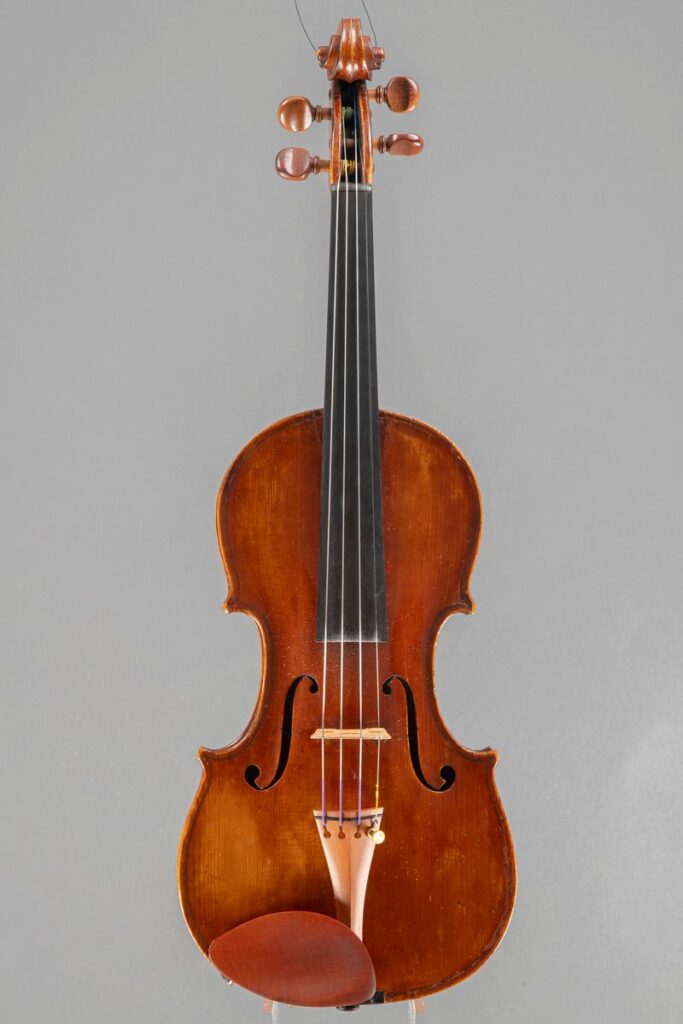
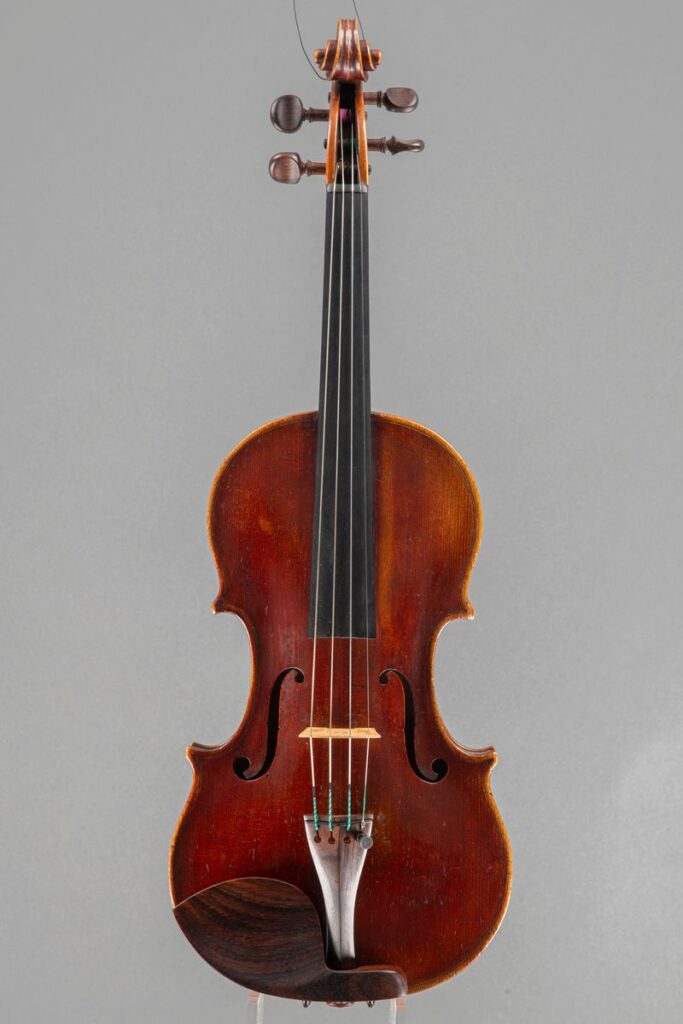
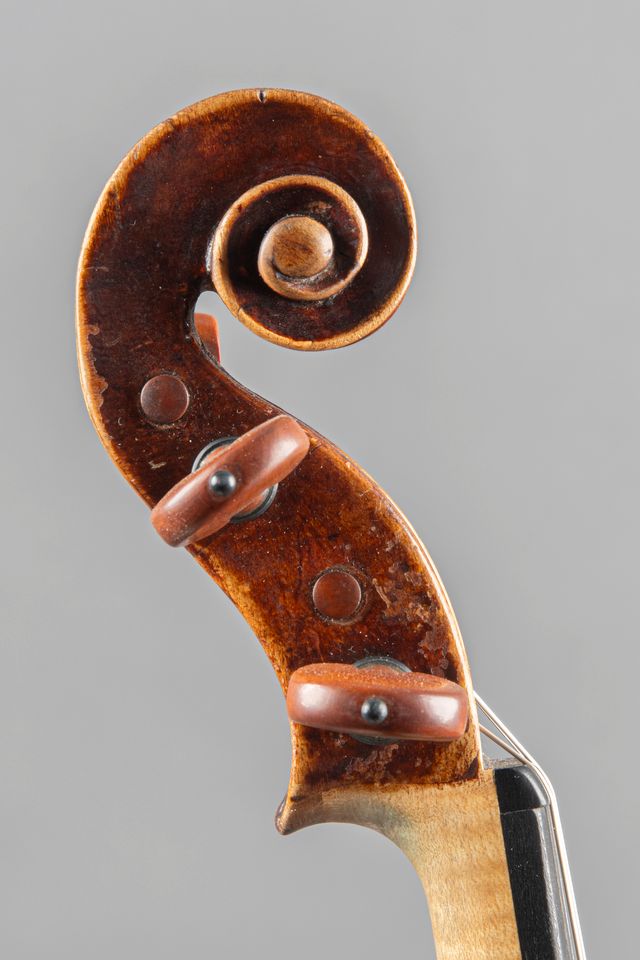
A rare 18th-century masterwork by Josef Klotz Jr., the most celebrated name in Mittenwald lutherie. This instrument features the family’s signature Stainer-influenced elegance and a sweet, silvery tonal profile. A historically significant instrument for the serious performer or collector.
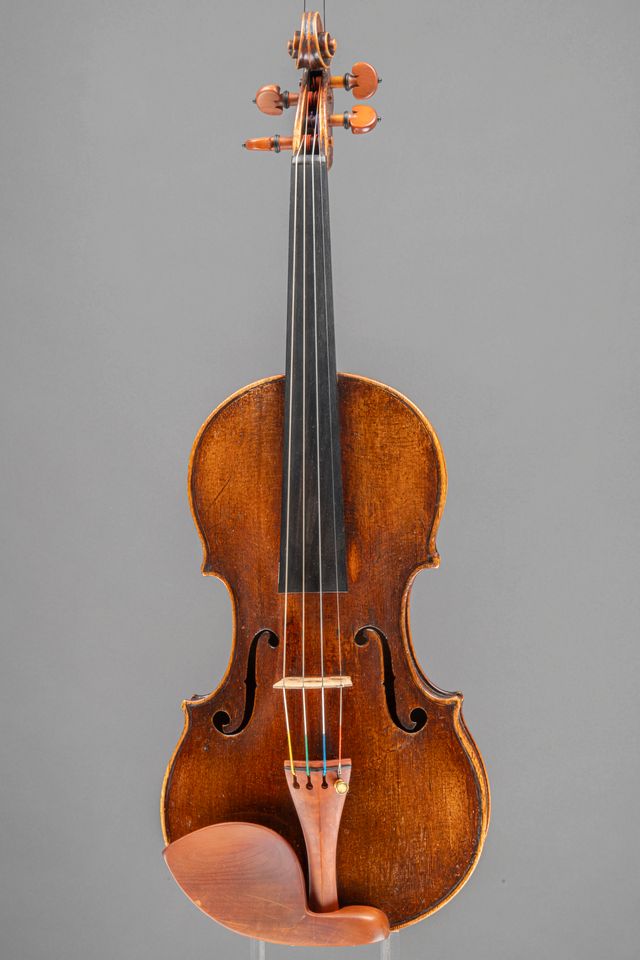
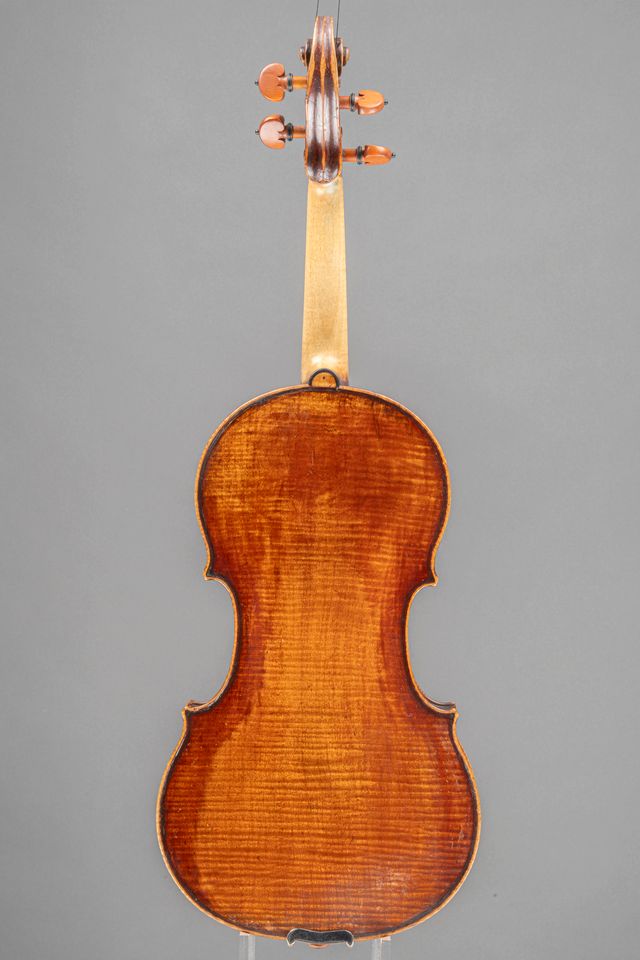

Not available at the moment
Violin by Josef Klotz Jr.
Price:
$12,000–$25,000
Details:
Year:
1801
Origin:
Mittenwald
Measurements:
356/164/115/206
Status:
Sold
History of the Violin
Josef Klotz (Mittenwald, late 18th–early 19th c.) of the Klotz dynasty. c.1800 instruments are Amati-inspired with moderately high arching, bee-stung corners, upright f-holes, compact scroll, and transparent amber–red-brown spirit varnish on Alpine woods. Labels (e.g., “Joseph Klotz in Mittenwald an der Iser”) often reflect family workshop. Valued for quick response, clear singing treble, and a warm, centered core.
Fill the form to get more details
- Drag to explore
Technical Excellence & Construction Details
-
Maker: Josef Klotz Jr. (Joseph Klotz)
-
Origin: Mittenwald, Germany
-
Period: Late 18th Century (circa 1770–1795)
-
Model: Characteristic Klotz Model (Stainer influence)
-
Size: 4/4 Full Size
Construction Details:
-
Top: Fine-grained Alpine spruce, often showing the "hazel" figure characteristic of high-altitude Bavarian timber.
-
Back: Two-piece maple with a subtle, elegant horizontal flame or characteristic plain maple of high acoustic density.
-
F-Holes: Slightly elongated and elegantly carved, a signature of Josef Jr.’s refined style.
-
Varnish: The classic Klotz "spirit-oil" varnish, typically a deep, transparent reddish-brown over a golden ground, possessing a beautiful antique patina.
Condition:
-
Structural Integrity: Excellent for its age. All historical repairs have been vetted for quality and stability.
-
Originality: Contains the original scroll and characteristic internal markings associated with the maker.
-
Setup: Professionally optimized with a custom bridge and period-appropriate setup to maximize the historical voice.
The "Silvery" Voice of the 18th Century
The sound of a Josef Klotz Jr. is often described by musicians as silvery, sweet, and incredibly resonant. It is an instrument that does not rely on "brute force" but rather on a sophisticated harmonic palette that creates a halo of sound around the player.
Tonal Characteristics:
-
The Upper Register: Shimmering and clear. It possesses a "singing" quality that is perfect for Mozart, Haydn, and the virtuosic repertoire of the late Classical period.
-
The Mid-Range: Rich and vocal. There is a "human" quality to the A and D strings that makes them exceptionally expressive for lyrical passages.
-
The Lower Register: Warm and focused. While not as "dark" as some Italian violins, the G-string offers a clean, articulate bass that never sounds muddy.
Performance Characteristics:
-
Intimacy and Blend: This is the ultimate chamber music violin. It blends beautifully with other strings while maintaining a distinct, noble character.
-
Responsiveness: Due to the aged wood and 18th-century arching, the instrument speaks with the slightest touch of the bow.
-
Projection: Surprisingly effective in recital halls. The clarity of the overtones ensures that the sound carries to the back of the room through "purity" rather than volume.
Professional Assessment:
The Josef Klotz Jr. offers a sophisticated, antique tonal character that modern instruments cannot replicate. It is a refined, aristocratic voice that provides the player with an incredible range of expressive colors.
Why This Josef Klotz Jr. Represents the Pinnacle of the Mittenwald Tradition
Owning a Josef Klotz Jr. is owning a piece of the "German Stradivarius" legacy. In the late 18th century, the Klotz family defined the standard of excellence for Central European violin making, and Josef Jr. (son of the legendary Sebastian Klotz) is widely considered the most refined maker of the lineage. This instrument represents the peak of 18th-century Mittenwald craftsmanship, offering a sophistication that rivals many contemporary Italian makers.
Unlike the generic "Klotz-school" instruments found in many shops, this is a genuine work by the master himself. It captures the transition from the high-arched Stainer models of the early 1700s toward a more robust, concert-ready design. For the musician who seeks a "soulful" instrument with 250 years of history, this violin offers a rare combination of intimacy, antique beauty, and professional performance capability.
Key Features:
-
18th-Century Provenance: A genuine historical artifact from the most famous family in German lutherie.
-
Sebastian Klotz Lineage: Crafted by the most talented son of the family's greatest master.
-
The Mittenwald Aesthetic: Featuring the characteristic dark, soulful varnish and elegant F-holes that define the brand.
-
Professional Certification: Authenticated and vetted for historical accuracy.
The Guardian of the Tradition: Josef Klotz Jr.
Josef Klotz Jr. (active late 18th century) was born into the most prestigious violin-making dynasty in Mittenwald. As the son of Sebastian Klotz, he inherited a workshop that was already world-famous, but he brought a level of detail and refinement to the scrolls and varnish that set his work apart from his siblings and contemporaries.
A Legacy of Craftsmanship:
During his career, Josef Jr. refined the "Klotz Model"—a design that blended the sweetness of Jacob Stainer’s high-arched violins with the structural strength needed for evolving musical demands. His work is noted for its exceptional wood choice; he had access to the finest high-altitude spruce and maple in the Bavarian Alps, much of which was seasoned for decades before he touched it.
While many makers of the period began to favor mass production, Josef Jr. remained an artisan. His hand-carved scrolls are particularly distinctive, possessing a classical elegance and a "bold" character that is a hallmark of his best period. Today, he is recognized as the maker who elevated the Mittenwald school to its highest artistic level, ensuring his instruments a permanent place in the world’s great conservatories and private collections.
Blue-Chip Stability in the German Antique Market
The market for authentic 18th-century Klotz violins is one of the most stable and reliable sectors in the instrument world. Because the Klotz name is the "gold standard" for German making, these instruments act as high-security assets that have consistently appreciated for over two centuries.
Investment Factors:
-
Historical Rarity: While "Klotz-style" violins are common, authentic instruments by Josef Klotz Jr. are rare. Verified examples are increasingly being absorbed into museum collections and foundations, reducing the available private supply.
-
The "Klotz" Brand Power: The name Klotz carries immediate international recognition. Whether in London, New York, or Tokyo, a genuine Josef Klotz Jr. is a liquid asset that is easily valued and traded by experts.
-
Performance Demand: There is a constant and growing demand from professional chamber musicians and early-music specialists for 18th-century instruments in excellent condition. This "player demand" provides a strong floor for the instrument's market value.
-
Historical Significance: As the most important maker of the Mittenwald school, Josef Jr.'s work is of significant scholarly interest, adding a "collector’s premium" to the instrument's intrinsic musical value.
Authenticity and Expertise You Can Trust
The world of antique German violins can be difficult to navigate due to the many "Klotz" labels found in 19th-century copies. Washington Fine Violins removes this uncertainty through rigorous vetting and professional guarantees.
Our Protection Policy:
-
Expert Authentication: This Josef Klotz Jr. has been meticulously examined and authenticated. We provide a comprehensive certificate that confirms its origin, period, and the integrity of its parts.
-
Antique Restoration Care: An instrument of this age requires specialized knowledge. We provide a full condition report and a maintenance plan to ensure the 250-year-old wood is preserved for the next generation.
-
The Washington Fine Violins Trial: We invite serious players to experience the instrument’s "voice" in a variety of settings. We offer an approval period to ensure the tonal character matches your artistic requirements.
Purchase Includes:
-
A certified insurance appraisal from Washington Fine Violins.
-
A comprehensive condition report detailing any historical restorations.
-
Ongoing tonal adjustments and consultation with Jim Kelly.
-
Access to our network of specialist restorers familiar with 18th-century lutherie.
Discover Other Violins
European Violin, possibly Italian branded and labeled A. Pollastri c.1950-60 (unknown maker)
Possibly Italian
1950 or later
Italian Violin "Lord Wilton" Copy by Jens Gosta Johanssen, Cremona, c2026
Cremona, Italy
2026