

Pick up a fine Neapolitan violin and you notice it before you play a note: a warm, glowing varnish, an elegant outline that clearly owes something to Cremona, and a scroll cut with a confident local accent. Play it, and the sound tells the same story, mellow and singing at once. More than any other name, the Gagliano family anchors that look and that sound. By the end of this guide you will know the traits to look for and what to listen for in one. We handle, appraise, and restore instruments of the violin family, so this comes from time spent with the real thing, not a catalog.
Who Were the Gagliano Family? (Naples’ Violin Dynasty)
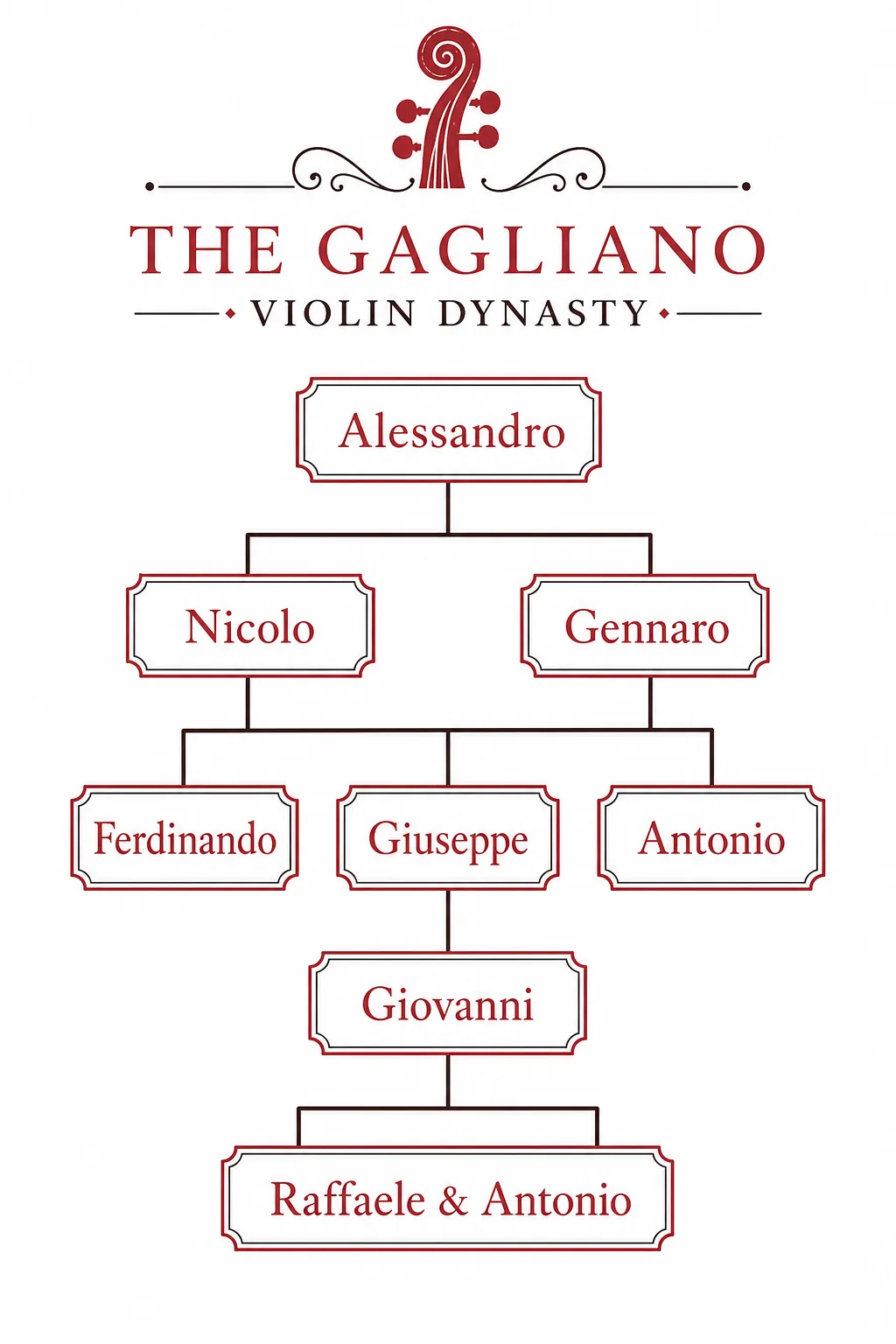
The Gaglianos were not one maker but a working dynasty that ran for roughly two centuries through several generations of Naples’ most important violin shop. So when people ask how many Gagliano family members made violins, the honest answer is a large family across four-plus generations, with the major names well documented and a few minor hands harder to pin down.
It starts with Alessandro Gagliano, the founder who established violin making as a serious craft in Naples. His sons Nicolò and Gennaro are often considered the high point of the family’s work. The next generation, Ferdinando, Giuseppe, and Antonio, carried the style forward, followed by Giovanni and the Raffaele and Antonio generation working into the nineteenth century. The Smithsonian’s overview of violin makers named Gagliano is a good, neutral place to see how the roster and lineage fit together.
Later-generation work is still very much part of the story. A violin by Raffaele and Antonio Gagliano shows how the family’s habits carried down through the years while each maker kept a personal touch.
What Is the Neapolitan School? (Cremona’s Influence, Naples’ Accent)
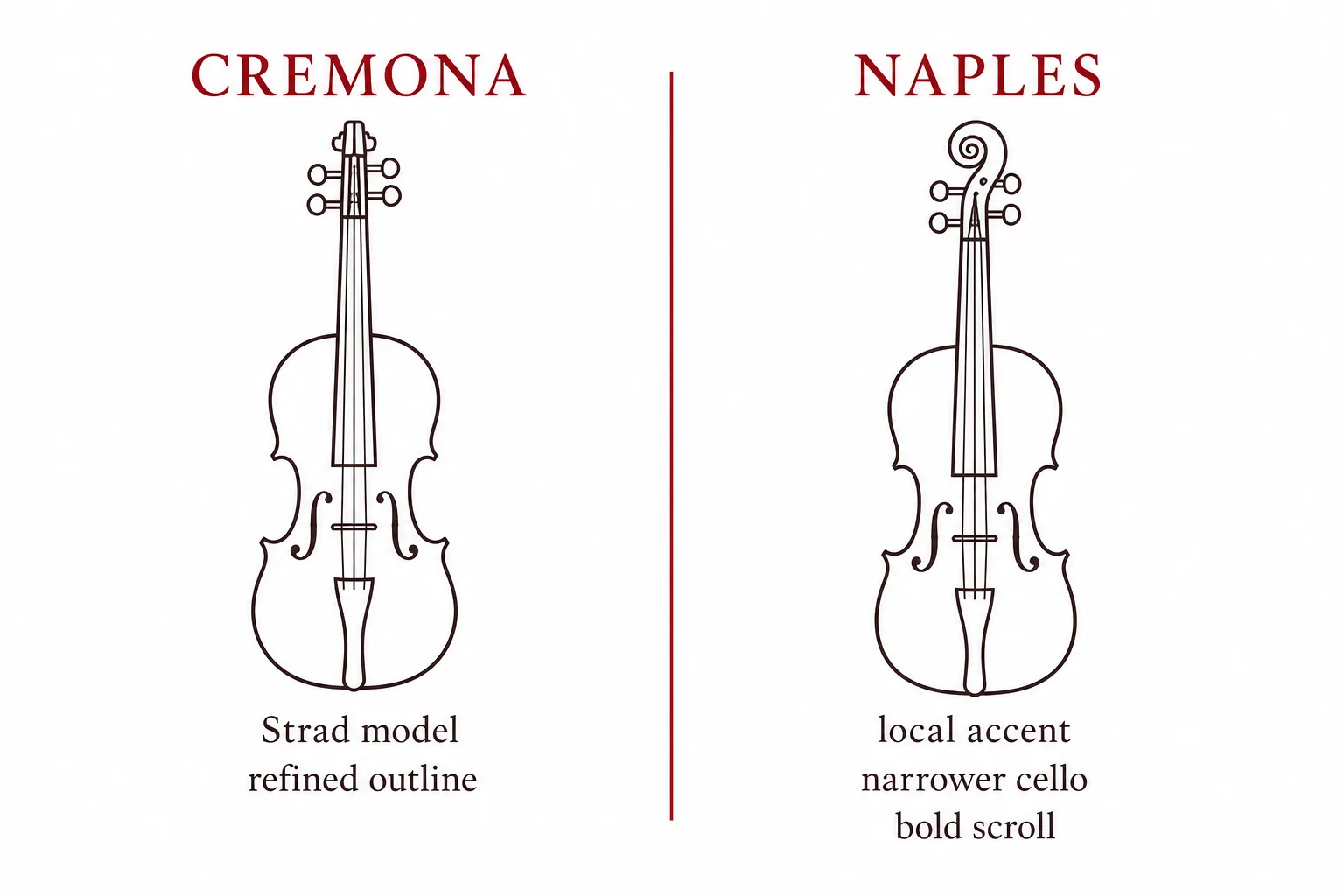
A “school” in violin making means a shared set of habits: the same models, materials, and techniques passed from master to apprentice, often within a family. The Neapolitan school grew from Cremonese inspiration, above all the work of Stradivari, then reshaped it with a distinctly local character. You will also read about a touch of Mantuan influence in the mix, which is one reason these instruments feel both familiar and their own.
Tracing who learned from whom is a real field of study. The University of North Texas holds a scholarly study of style and influence in the early schools of violin making that maps exactly these lines of descent. For a sense of the northern-Italian side of that conversation, a violin by Gaetano Gadda of Mantua makes a useful point of contrast against the Naples style.
The Visual Characteristics: How to Recognize Neapolitan Gagliano Work
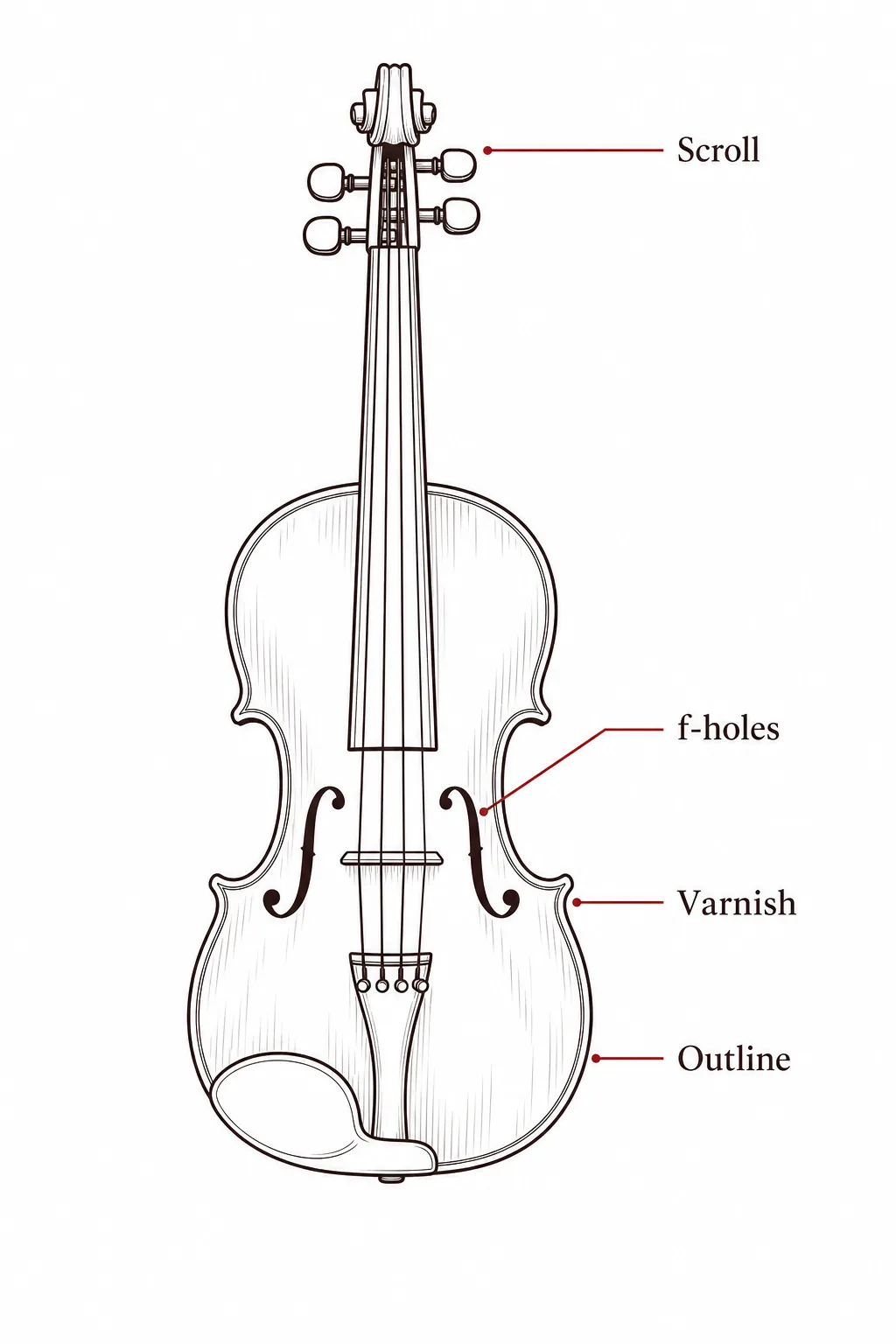
This is where the family really shows itself. A detailed monograph, The Gagliano: Two Centuries of Violin Making in Naples, documents these construction traits in depth, and they line up with what you can see in hand.
Model and Outline
The forms are Strad-influenced, with graceful proportions and a balanced outline. The family also settled on a somewhat narrower cello model that became a signature of Neapolitan making, a small choice with a lasting effect on how these instruments look and speak.
Scroll and Ribs
Look for a compact, boldly carved scroll, neat and purposeful rather than showy. Because each maker cut by hand, the scroll is often where a trained eye starts to separate one Gagliano from another. That principle holds across Italian making generally: consider how the personal scroll workmanship of a maker like Riccardo Genovese can distinguish a hand from that of his teacher.
Varnish and Wood
Expect a warm varnish running from golden to red-brown, often laid over local Italian timber. On a good Neapolitan instrument the varnish and the figure of the wood read together, soft and lively rather than glassy.
f-holes and Finish
The cut of the f-holes is one of the surest fingerprints of the hand. Their shape, their set, and the small choices in how they are carved often say as much about the maker as the label ever could.
The Sound: Why Players Love Gagliano Violins
Are Gagliano violins good? Yes, and they have earned that reputation with working musicians over a long stretch of time. The tonal character tends toward a mellow, warm lower register on the G and D strings, with a silvery, singing quality up top. That balance is why serious players and teachers gravitate to them: they carry in a hall yet reward the subtlety of solo playing and blend well in an ensemble.
As for what one is worth, value depends heavily on the specific maker, the period, and condition, and we treat any figure as a professional, informed opinion of value rather than a promise. We would never quote a guaranteed price or an investment return on an instrument. What we can do is tell you honestly what you are holding.
A label inside a violin is a starting point, not proof.
How These Traits Help You Evaluate a Fine Italian Violin
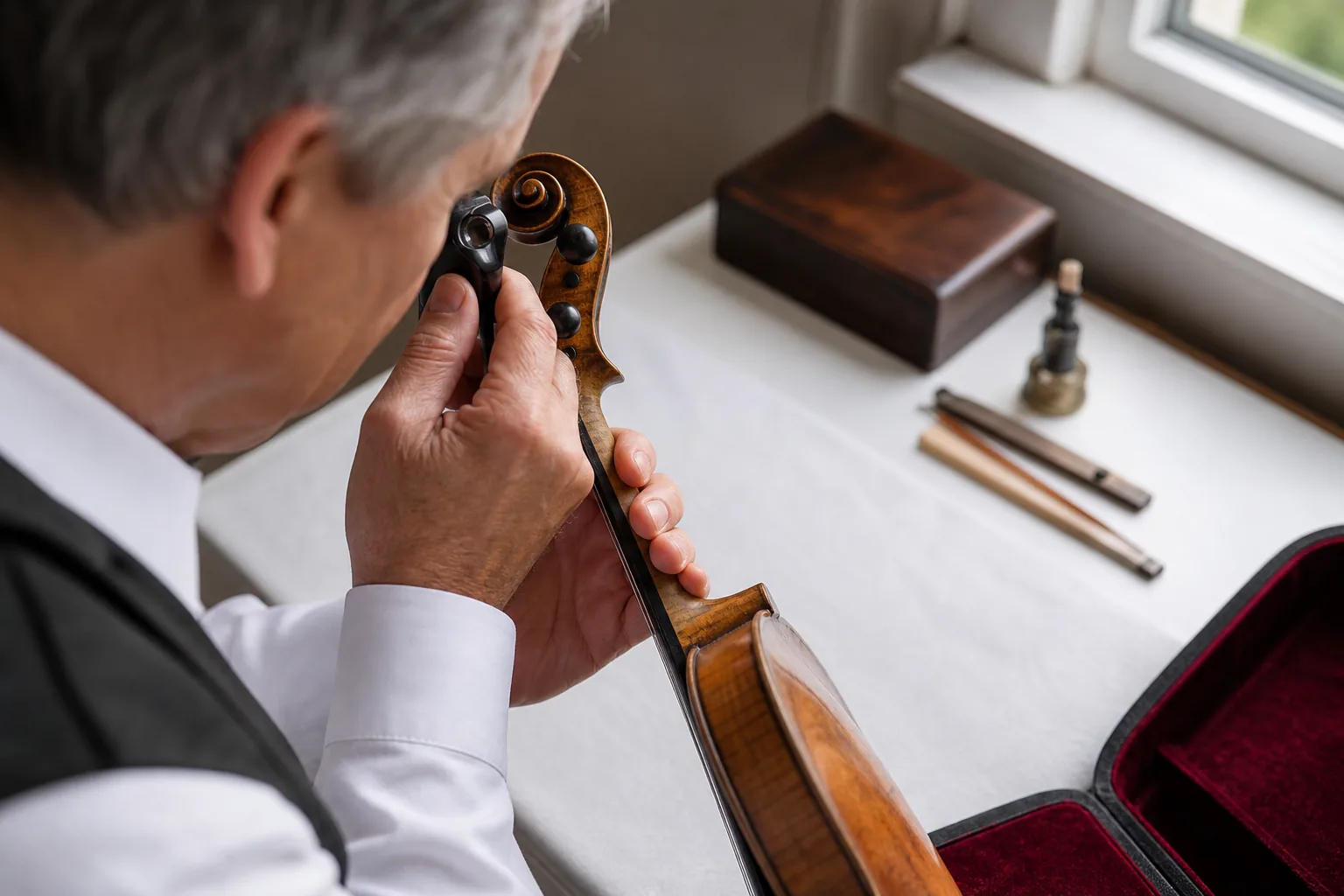
Here is the practical part. Attribution rests on the whole instrument, the wood, the varnish, the scroll, the f-holes, and how they agree with each other, and condition matters enormously to both sound and value. A crack, a replaced part, or an old repair can change everything.
That is why a hands-on appraisal by an experienced person beats a label or a set of photos every time. Someone who has handled many of these instruments can weigh all the traits together and give you a clear, transparent read.
Bringing a Gagliano (or Any Fine Violin) to the Shop
We serve players and families across the Mid-Atlantic, from Washington DC, Maryland, and Virginia out to Delaware and Pennsylvania, and we welcome the chance to look at a fine instrument in person. If you are an executor evaluating an inherited Italian violin, bring it in and have it looked at with no pressure. Fall, from October through January, and late spring, May through June, tend to be our busiest seasons for viewing and upgrading, so it helps to plan ahead.